First vibe-coding project - Clarity.co
Goal

Explore how far I could go with AI-driven “vibe coding” by building a simple daily productivity tracker without traditional design processes. The idea was to log long-term goals, track daily progress, and reflect on what went right or wrong.

What I tried and how

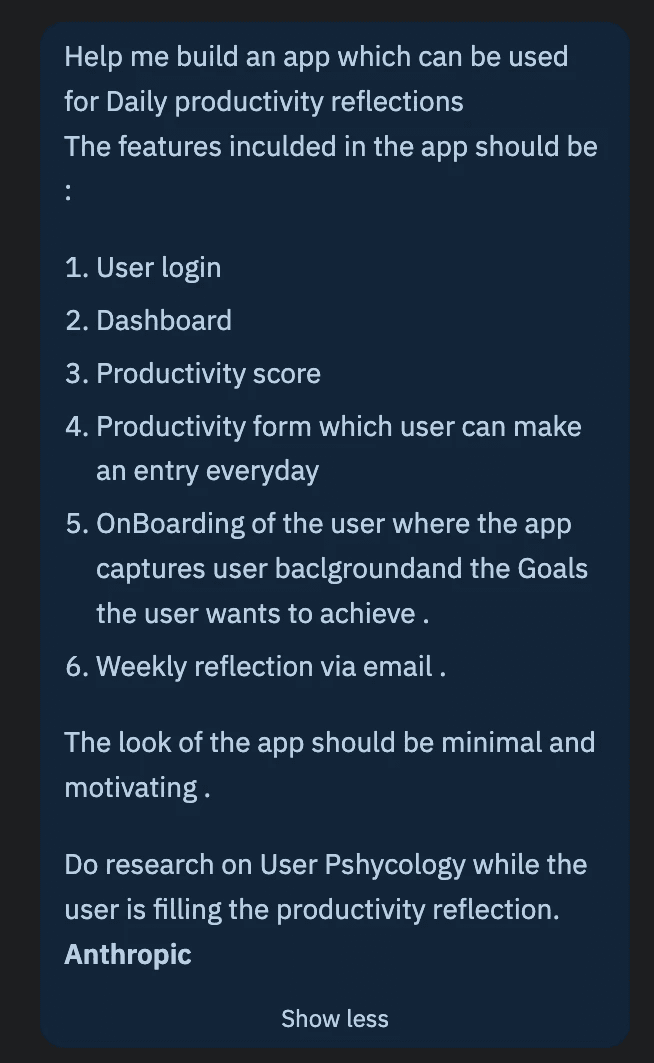
Started directly with prompting (no prior research), focusing on quickly generating a working concept. Iterated through multiple prompts, gradually adding more context and clarity to guide the output. With each iteration, refined the structure — from basic tracking to incorporating streaks, calendar logging, and eventually exploring more character-driven and theme-based directions.

That's exactly how I started !
Outcome

Was able to move from a very generic starting point to a more structured and usable concept within a few iterations. The output improved significantly as prompts became more specific, but still required manual thinking to shape direction and coherence.

Link to the app : Clarity.co

Learning and Insights

Learning and Insights

Realized how critical context and clarity are when working with AI — vague prompts lead to generic outputs, while structured inputs improve relevance quickly. Also noticed a clear difference between free and paid AI models, where paid versions produced more accurate and context-aware results.

At the same time, this exercise highlighted the importance of design process. Since I skipped research and jumped straight into building, I ended up iterating frequently and reshaping the product direction multiple times. It made me realize that upfront thinking (like user understanding and problem framing) could have reduced unnecessary iterations and led to more focused outcomes.

Overall, AI helped accelerate exploration, but meaningful product direction still depended on structured thinking and design fundamentals.

Realized how critical context and clarity are when working with AI — vague prompts lead to generic outputs, while structured inputs improve relevance quickly. Also noticed a clear difference between free and paid AI models, where paid versions produced more accurate and context-aware results.

At the same time, this exercise highlighted the importance of design process. Since I skipped research and jumped straight into building, I ended up iterating frequently and reshaping the product direction multiple times. It made me realize that upfront thinking (like user understanding and problem framing) could have reduced unnecessary iterations and led to more focused outcomes.

Overall, AI helped accelerate exploration, but meaningful product direction still depended on structured thinking and design fundamentals.